Thursday, September 19, 2024

Welcome! Poetry Friday Is Here!


  • "A smile is a welcomed sight that invites people in."

  • Do you feel me smiling? I am, because I'm delighted to welcome you to this Poetry Friday, two days before the first official day of Autumn.

Want to know what Poetry Friday is? Here is an explanation that Renee LaTulippe shared on her blog, No Water River, 

          Many of you know that I am the Volunteer Coordinator at a non-profit used bookstore run entirely by volunteers. Except for a few "new" books we purchase, every book in the store has arrived through donations. It's an amazing and wonderful place. In addition to those donations, some interesting things come in the boxes of donations and in the books, too! Sometimes, there are postcards, special notes, and photos. Other times, we find lots of sticky notes, boarding passes, receipts, playing cards, and certainly bookmarks from bookstores everywhere.  
          One thing recently left in an older book, not a bookmark, was a pressed leaf. And, I've kept it, imagining who kept it, when and from where. So I have it on a shelf, remembering the time I created a leaf book when I was a child, excited for the coming season.  I know many of you are, too, a time of change and beauty as we say our goodbyes to another beloved season of sunshine and lazy days and vacations. 


Clock Watching


Summer yawned before us in June.

We leapt into time spent our way,

with neighborly talks,

July outside walks

at the shore enjoying the spray.


Days filled with flights or blue highways, 

picnics with family and friends.

Gardens are growing

because we are knowing

how quick summer slips to its end.


Earth at its maximum tilt

brought hours full of buttery sun.

Yet weeks circle by,

now we give a sigh

at the signs summer’s had its full run.


Linda Baie ©


A Reminder - Here is the #PoetryPals challenge for next week, the last of September!

             Poetry Peeps! You’re invited to our challenge for the month of September! Here’s the scoop: We’re wandering through Wallace Stevens’ “13 Different Ways of Looking…” at something. Maybe it’s not 13 ways – maybe it’s only seven. Maybe it’s not a blackbird or anything alive, but something inanimate. Whatever happens, your way of looking will be different than mine, and I’m here for it. Are you in? Good! You have a month to craft your creation and share it on September 27th in a post and/or on social media with the tag #PoetryPals.


Leave your links below!


You are invited to the Inlinkz link party!

Click here to enter

Monday, September 16, 2024

It's Monday - A Variety of Books


        Visit Kellee and Ricki at UnleashingReaders and Jen at Teach Mentor Texts to see what they and others have been reading! Your TBR lists will grow! 

Thanks to Scribner Books for my Advanced Copy

           It's a challenge to share this brief (less than 100 pages), yet oh, so filled with gifts of abundance from Robin Wall Kimmerer, the author of another thought-filled book titled Braiding Sweetgrass. This time, taking the serviceberry as her model, Robin makes her case for "a culture of gratitude", to move to what she terms a gift economy, "wealth is understood as having enough to share, and the practice for dealing with abundance is to give it away." Producers and consumers would not undertake to create scarcity to drive up prices, but realize that a gift given can mean a community that shares, one that values the relationships over profit." It is people caring for others and for their world. 
          The serviceberry offers its wealth to birds, who flourish and, in turn, spread its seeds. Robin is a member of the Potawatomi Nation, one of the Anishinaabe peoples of the Great Lakes region. This berry's name in their language is Bozakmin, and the root "min" means "gift."  She weaves her argument for change to a gift economy from the book's beginnings when she shares that a nearby farmer, a neighbor, has invited a number of people to come to share their bounty and pick their serviceberries at no charge. They are part of a community that cares about each other and while also needing to earn money for their expenses, this sharing also nurtures relationships and a hope that neighbors will reciprocate during the year in other ways. 
         Robin's argument pulls away from our ways of consumer capitalism to a gentler and more sustainable approach where all needs are met, including the environment's. It is filled with good reminders that looking again at our lives can mean we find another way of life that can work better for us all!

Thanks to Second Story Press for my e-copy.
I won it via the ALA Grab-a-Galley

          Sheila Baslaw tells this sweetest story with Karen Levine, a beautiful tale from before World War II when her father was a young boy. He, with his parents and five sisters, lived in Russia in a small Jewish village called a shtetl. Shmuel (not his real name) was one of the youngest in the family. His job was to get water from the town square each morning. One day, when he went, a wagon rolled in with two men and a wagon full of supplies! It was time to bring electric street lights to the town! 
          Though Shmuel kept being shooed away by the older and gruff worker, the other younger worker was patient and answered all his questions, helping him learn how it all worked! There was a big celebration when those lights were finally turned on, and the square became a place for evening fun now that it was lit. The mayor came to this young, ten-year-old and told him that the worker had said Shmuel would be able to do repairs if the lights ever needed them or a bulb went out. If it happened, he would be paid! 
         Shmuel's family was very poor and often had little to eat. Each one got some small jobs, yet still, it seemed never enough. One night, in a storm, wires were loosened, and a bulb was broken. This young, brave boy went to the mill to turn off the generator, then climbed that pole and fixed it! The rest of the story is about saving the family, for the townspeople were so grateful and shared what goods they could with the family, adding a note that said, "for our brave new light keeper". 
         Sheila writes that her family had not known this story for a long time from her father's childhood and wanted to capture it for him and to honor his bravery. The illustrations by Alice Priestley feel just right for the historical feel of the story, in brown, muted tones with touches of color, a picturesque village showing the people's dress, and a community having fun despite hardships. 
          

Many thanks to Candlewick Press for the following books!


            In her third cumulative picture book, Randi Sonenshine manages again, in brief verse, to introduce us to another creature, the amazing octopus. She does say in her author's note that in this book, she has focused on the common octopus, among the 300 other species. When I read the book, I didn't consider the usual definition of "common", for Randi's verses show its incredible resourcefulness. When needs arise, octopuses improvise as shown in this opening verse by Randi: "This is the ledge of sandstone and lime,/layered with shells cemented by time,/that shelters the den that Octopus built." Readers will see how the octopus eats, shelters, escapes its enemies and ends with a most important work, laying anywhere from 100,000 to 500,000 eggs, then attaching them to her den roof and endlessly cleaning them with water until she swooshes them off to the sea. I enjoyed the book and the amount of information given so much, I want to tell you all, but you need to find this book, beautifully illustrated by Anne Hunter in softly colored pages, and read to discover more. There is much that is called "Octo-Knowledge" in the back matter, with an author's note and a glossary! (The other cumulative books by Randi and Anne are The Nest That Wren Built and The Lodge That Beaver Built.)


         I reviewed the first book in this Amazing Animals series, Detector Dogs, Dynamite Dolphins, and more animals with super-sensory powers, by Cara Giaimo and Christina Couch a couple of years ago, and now this one is out. Like the first, this is an extraordinary book, like the extraordinary animals and science explained when author Stephanie Gibeault describes the studies of five animals, like guppies and spotted hyenas, and their number intelligence. Fascinating also is the introduction of the animals that were tested and the testing itself as it became more complex.
The experiments are explained, the what, the how, and the double-checking of results. Jaclyn Sinquett adds to the enticing explanations with colorful illustrations, color-highlighted pages, like one titled "Guppy Gossip" and another, "Frog Love Song". Each section includes a summing-up page and an inviting activity for readers.        Enticing pages with those illustrations and photos invited the reader in so well. I often felt like I wanted to read what was next because of the topic. 
       Finally, there is an extensive list of text notes by chapter, a bibliography, and an index. This book, and the previous one, can make a terrific study for an individual or a group, and also become deeper research into one particular or more. 
          

           It seems that this may be a book for an adult and a young child, an interesting introduction to animals who use tools, too! In double-page spreads with large, colorful, and realistic illustrations by Jane McGuinness, Martin Jenkins writes a brief sentence on the left about the animal in large print. On the right is a more complicated explanation in smaller print with the illustration. There are a few with both on one page. Animals included are bowerbirds, sea otters, and chimpanzees, the one identified as the animal that used tools more than any other. A delightful surprise ends the book, and there is an index. It will be a great beginning learning for young readers. If slightly older, they may want to discover more through added research. 

Next: I am reading the very long and just out All The Colors of The Dark, by Chris Whitaker. Thus far, it's mesmerizing. Now that I've finally started, it's very hard to put down!
Thursday, September 12, 2024

Poetry Friday - A Better Choice

           It's Poetry Friday, and Heidi Mordhorst is hosting HERE on her blog My Juicy Little Universe.  Be sure to visit to learn about a new activity she introduced this week to her WHISPERshout writing workshop after-school classes, and the wonderful poem it led them to write!  Thanks for hosting, Heidi!


             I am reposting a poem I wrote and shared in December 2016 for Mary Lee's challenge, #haikuforhealing. I assume you know where we were after that election– upset, not exactly knowing what was going to happen. Now, this new election is less than two months away. Today, I am certainly hopeful, but still jittery! 


Wishing you all a special weekend ahead!


Monday, September 9, 2024

Monday Reading - Old and New


        Visit Kellee and Ricki at UnleashingReaders and Jen at Teach Mentor Texts to see what they and others have been reading! Your TBR lists will grow!  I didn't have much reading time this week, but I do have a few books to share! Hope all have had a good start to September! Here comes fall!


            And, because you saw the cover, you know that I just finished reading Olivetti by Allie Millington. There is Ernest, the center of this story, a 12-year-old who prefers to read dictionaries instead of talking to his family of three other siblings, a mom and a dad. At least, this is the beginning, yet suddenly, they learn that mom has gone missing. And her beloved typewriter, an Olivetti Lettera 22, is missing, too. They spend the next hours and days putting up missing posters, talking with neighbors, filling up with anxiety. Until they arrive at a neighborhood pawn shop and see that same typewriter that they call Olivetti, they know little. The owner realizes something is very wrong, and his daughter, Quinn, enters into the search later, forcing herself into Ernest's world but only to help. 
            It's an extremely emotional story, despite the fact that a typewriter really is participating by telling its part in what may have happened to the mother. There is an underlying mystery that Ernest refers to as the "Everything that happened" earlier in the family's life. It's intriguing to imagine what an inanimate object that is connected to words, might know, and further, be able to communicate. This story which moves from past to present, alternating with the typewriter's story-telling,  still feels very real, showing a family, alternating falling apart and then holding each other up. Those outside the family, like Quinn, and a few others, add to the story with their compassion and willingness to step in with support. I know it's a cliche, but I must call this book an exceptional roller coaster ride, from the anticipatory rise when one begins to read,  to the breath-holding for many pages before one drops, and then, the satisfying feeling at the end. 


Thanks to Charlesbridge for this copy!

         Traci Sorell shows the delightful ways of gratitude that she so beautifully shared in her picture book, We Are Grateful. This time, she has brought parts from that original book to place in board books for each season. They have few words, centering on family and activities specific to each season, like swimming and  watching animals outside, playing in the snow, and also including festivals like the Great New Moon ceremony in the fall. They're just-right introductions to the seasons with colorful illustrations by Frane Lessac. 


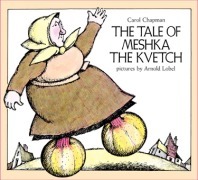
It is an older book but one needed by many. It is a lesson in finding the good things in life every day! If you don't know it, find this one at your library! By Carol Chapman and illustrated by Arnold Lobel, one to savor!


           This feels as if it will bring great discussions of what "Purple People" are and how one can recognize them. Kristen Bells shares that they ask lots of questions, laugh a lot, use their voice when needed, and work very hard. There is a Step Five, but I'll let those who find the book discover that one! It's fun to read, will be nice to read aloud to a group, to show a way to give respect to ALL kinds of people, and in this book, kids! Daniel Wiseman's illustrations are funny and happy and full of many colors, not only purple! 


Next: A brief book that has started beautifully, The Serviceberry, by Robin Wall Kimmerer, author of Braiding Sweetgrass. And, I have a few mysteries to choose from!

Happy Reading!

Thursday, September 5, 2024

Poetry Friday - Goodbyes Made Sadder

It's Poetry Friday, and Buffy Silverman is hosting HERE on her blog by the same name.  She is giving us a delightful peek at her new book, which is coming out next week! See the cover above! Don't miss it! Congratulations and thanks for hosting, Buffy!

              I wrote this a few days ago, before Wednesday, September 4th. It's not a happy post, but I thought many of you would like to know the poem my husband chose to be read at his funeral. He passed away eleven years ago on September 4th, a day I won't forget, though I will also remember the good memories of our life together for many years. 
          Now, with the grief of missing my husband, I am also filled with sorrow for those whose loved ones died Wednesday. And, I am angry that our country cannot make changes, especially to protect our beautiful children and also adults who have left their loved ones way too soon. You know the arguments, all of them.   
             The poem is The Long Boat by Stanley Kunitz  Here, on his 100th birthday, he is reading it.

      The Long Boat

When his boat snapped loose
from its mooring, under
the screaking of the gulls,
he tried at first to wave
to his dear ones on shore,
but in the rolling fog
they had already lost their faces.
Too tired even to choose
between jumping and calling,
somehow he felt absolved and free
of his burdens, those mottoes
stamped on his name-tag:
conscience, ambition, and all
that caring.

        the rest is HERE